Showing posts with label ODU. Show all posts

Friday, May 1, 2009

Challenge 3: (Sorta Video) Podcasting

It's May Day. Get to the streets, then return for my rousing FINAL EXAM!

It will be a review of a new article, my blog, and new media technology. For flow reasons, it is best to let the video load the whole way before watching.


Below, I will be on Cover It Live at 9:15 am. I will be watching and listening to my podcast, commenting, providing new news, views and information. Please join me.

Since the event is over, one can just read along as it goes, which is hella easy. I usually post something after I hear myself say it on the video, so it is easy to follow along. I post continuously, so don't worry about being bored - unless you're lame. Thank you for your time this semester.


Reflection Post
4/1/09

I chose four technologies in particular to work with. The first was podcasting, something that I've been wishing to try, but never able to do. The next was video podcasting, which, because I don't have a video camera, I had to rely on photos to tell the story. Third, Twitter. I opened my Twitter up for my Final Exam. Fourth, I decided to use "Cover It Live," which was very enjoyable. I was able to poke fun at my video, make corrections, etc. that I wouldn't be able to do otherwise.

I had created too many blog posts for this class, so one that I was working on for another blog, as I mentioned before Latin American Musings, was one called "Swine Flu: It's Not Race, It's Capital." Instead of just posting a new post onto this site, I set the a personal goal of telling this tale in a new way. So I set up a podcast, pulled official sources like the New York Times into the post, played music and hosted a "live" report from ODU on student reactions. Students are being taught in journalism classes and schools all over the world that their industry is dying, to survive, the skills I tried to display here today are necessary to set one apart in the future. The ability to create an interesting blog, edit video, take photos, and use networking tools add to the already inate ability to write.

I'm on my sister's Mac. I did not know how to use iMovie, or iPhoto. I learned, for sure, but it was a work in progress. I think the video is well done, although looking back, I wish I did video. I had plans for an introduction via the internal webcam, but I could not figure out how to make the podcast begin after my intro, so I scrapped it. I think CoverItLive was what sowed everything together. It adds a new level for any listener who comes to my blog. I tried to provide new info, pictures and links that I did not mention in my original podcast. I also would have cooled it on the music, maybe just during the "Swine Flu" part, instead of cutting in and out. Otherwise, the music was lively, people probably haven't heard any of it before, and it does provide a great interlude between segments. I thought the length might also be a problem, but I don't know how I would have gone shorter, especially for a final project.

This has added to the content of my existing work this semester in many ways. This podcast highlights all my posts and their role in a journey that I took over the semester. If the listener had missed a segment, I mention them all in my podcast. My opinions of what journalism is, or should be about, may also cause a listener to look back on prior work knowing my philosophy. The technology also shows that I am in touch with new media, which my body of work and blog showcased. It also provides a stepping stone from this blog to my new blog. My first post looks so sedate compared to the maps and Flickr images and podcasts of the last three posts before my final. I will take these tools with me into the future.

The future always adds something new the work of the past.

Monday, April 27, 2009

Overall Reflection Post

I accomplished much for the first real blog I had ever done (I have since become hooked, and have started a blog, Latin American Musings, a few weeks after we began which averages 3,000 hits a month). So, in terms of original writing, ideas for posts, guidance in class and from peers, this project was successful. However, there is not much of Latin American community at ODU, so my project was a bust but I made the best of it.

I don't think I would have wanted to change my topic, I enjoy some of my pieces. However, I think I would expanded, narrowed - something - in order to make this more successful with better content that I just could not get.

I would have added more voices from people at ODU, but that was hard to find. I would have added maps to more of my posts because I dealt with areas away from ODU and it would have been nice for the reader to see those things (I did this on my post "The Dirty Side of Ecotourism"). I also would have taken more original pictures for my Flickr account, which I did get into a one time. I hope to correct that problem as I continue blogging.

Overall, I had a positive experience and hope to use a lot more tools in my future of blogging. I hope to use podcasting for the final project due next week. I may use the live call-in technology that Lauren showcased. This blog opened my eyes to possibilities and now I am running with it.

Wednesday, March 25, 2009

U.S. Knews of Human Rights Abuses in Guatemala

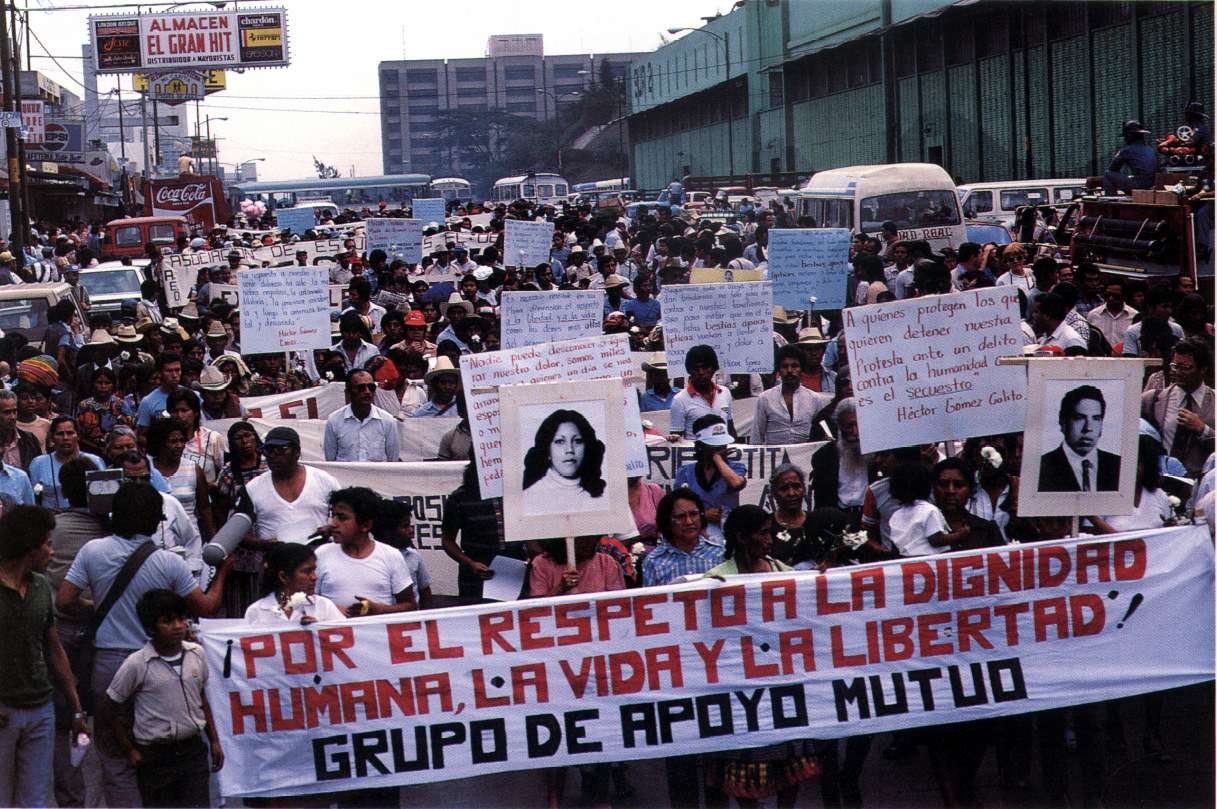
Last week, I brought you the "where" of Alberto. This week I bring the "why." Like many Central Americans I have previewed on this site, Alberto can only be added to my list of those displaced due to civil war and violence. Guatemala experienced one of the longest (30 years, circa 1960 to 1996) and deadliest (up to 200,000 dead) civil wars in Latin America. Alberto's family, his being in Norfolk, can be traced back to the 1980s, when his family fled the increased terror under Fernando Romeo Lucas.

Guatemalans protesting disappearances in 1980s

Documents released last week by the National Security Archives reveal the extent of US involvement in the human rights abuses in Guatemala from the early 1960s until the peace accords in 1996.

The US State Department acknowledged throughout the thirty-six year civil war that it knew of the kidnappings of activists, labor organizers and high school students perpetrated by the Guatemalan government, and did nothing to halt the abuses.

"The government is obviously rounding up people connected with the extreme left-wing labor movement for interrogation," then-U.S. Ambassador Frederic Chapin said in a 1984 cable.

The most infamous case, one that Chapin actually thought would be solved, was the disappearance of Fernando García, a student and labor leader, who was declared missing in 1984. Records from the released documents show his name appearing on a log of kidnapped persons kept by the Guatemalan National Guard.

Last week, Guatemalan authorities arrested two police officers on charges related to the 1984 disappearance of Edgar Fernando García, a trade union activist.

Guatemala's military often have secured immunity from prosecution under the 1996 accords for crimes, which NYU historian Greg Grandin, who was a part of the true commission in that country in the late-1990s has called "genocide."

200,000 people were killed in the Guatemala's civil war. The majority peasant and Indian, which makes up 87 percent of the country.

The US supplied weapons, aid, training and support throughout the thirty-six year war, which some could say began in 1954, with the CIA-backed overthrown of elected president Jacobo Arbenz - the first such action in Latin America.

For more information, visit:
National Security Archives
Guatemalan Solidarity

Wednesday, March 18, 2009

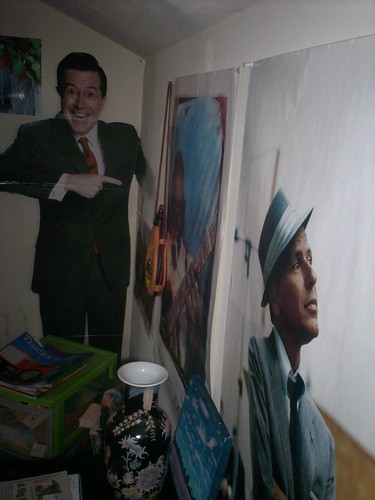
Colbert and Sinatra (Where)

It's not coincidence that I have fallen behind in my posting. My original idea for a post that must contain on one of the five "w's" (who, what, when, where or why) fell short of expectations. Thus, this post will blend with my news post posted later this week.


It is quiet in here. It is modern in here. It is eclectic in here. Those are a few of my opening salvos as I waltz in from the rain into my friend Alberto's house. It is an apartment, like others who live off campus, but the story - the who, what, when, and why of the equation is the interesting part. ("Why" will be covered next week.)


Suffice to say, Alberto is from Guatemala. Not studying abroad as much as living. He calls this home. He doesn't live alone, but one cannot mistake his style for that of a norteamericano. He tries to pass off this Frank Sinatra and Stephen Colbert poster on his roommate. "A real norteamericano," he laughs.


Times are tough (who's aren't) and for students it's been worse. His home, however, does not exude poverty or struggle. It is clean and, at times, annoyingly proper.

"Let's dispel the myths - my home in Guatemala was nicer than here, minus the staircase," he said.


Home is where the heart is - and it is becoming increasingly clear that home is becoming more streamlined and generic. Alberto agrees. If he had it his way, it would be more reflective of him but like all partnerships, he and his roommate must share. That means Sinatra and Colbert (he finally admits it is his). A typical home, in a typical town, with typical kids worrying about more than design choices.

Monday, March 16, 2009

'Indignation leads a journalist to take sides; to side with reality, and with changing that reality'

He's smoking a cigarette and I'm in the doorway, leaning over the hinges to angle a better view of the computer screen. Tabbed out across the quite sprawling screen is a blog by CISPES, (Committee in Solidarity with the People of El Salvador), a smaller blog in Spanish by someone taking pictures on the ground, Twitter, and El Diario de Hoy, which is streaming live video. It is nearing 7:30 pm in San Salvador, when the first returns for the election were supposed to be in.

Benjamin announces to no one in particular that someone on Twitter is predicting the FMLN to win. "51 to 49 percent" he summarizes. Francis stubs out his cigarette, looks at his watch and pushes past me on his way to the computer. As much as this means for me, I know it means more for them.

As mentioned in my previous article, "Not Just Some Fractured Fairy Tale," my roots with Salvadorans go deep and in each face, and in the faces imagined, one can see a range of emotions. Ben and Francis are two Americans by birth. Their families, for whatever reason, fled Salvador during the civil war in the 1980s and tonight, those memories will be closing for some.

"You spent six BILLION dollars," Francis emphasizes outside, the "you" taken someone hurtfully, "to try to stop the FMLN and here they are."

"Will they win," I asked.

"Who knows? Did they win last time?"

Francis has been a friend of mine since high school who came down for the weekend. We went to a classmate Ben Orantes' apartment outside campus, also of Salvadoran origin. Ben has never been back to his homeland, Francis only once - briefly. Ben grew up in San Antonio, Texas with his mother until he decided to get back with his father who found his way into the US Navy (and then, like many, to Norfolk). Francis never saw his father, who worked in North Carolina and lived with his mother in Manasssas, VA. Their parents both left to avoid the violence during the civil war, along with roughly a million other refugees absorbed by the US.

"No," Ben said earlier in the night. "My parents live here now, they have no roots. He was not a guerrilla," referring to the soldiers in opposition to the US-backed government, "he was too young. I don't think they will go back."

Salvador has been trying to curb emigration from its country and some believe that the election of the FMLN and Mauricio Funes will actually bring Salvadorans back from the US, especially with the global recession in full swing.

"If Funes [the candidate running for the FMLN, the left wing party] wins," Ben continues, "I don't know if people will go back, it's been hell, you know, for the past twenty years."

In 1992, El Salvador signed a peace accords with the FMLN guerrillas. The accords stated that the political process would be open to all and, for the most part, this was true. Elections were held in 1994, 1999, 2004, and yesterday. Each election saw the right-wing ARENA party, founded by death squad leader Roberto D'Aubuisson (Rodrigo Avila, who ran for president for ARENA this cycle has admitted to killing guerrillas during the civil war) victorious, mostly because it had the backing of the US government, which in 2004 threatened the Salvadoran people into voting ARENA with threats of ending remittances, which make up 20 percent of its economy. This election is seen as a referendum on ARENA and coincides with a general shift left-ward in Latin America. The major issues facing Salvador continue to be corruption, violence, gangs, and remittances. Each promised to deliver, but only time will tell.

The TES, the election counting board, representative comes out twice until around 8:30 Salvadoran time (10:30 EST) when he congratulates the Salvadoran people for a peaceful, free election and announces Mauricio Funes as president elect of El Salvador.


"Fireworks are going off in Sonsonate!" Ben announces, pointing to the Twitter screen. Francis is elated. As am I. There are a lot of unanswered questions but they have no place for tonight, which is the night of celebration.

"I have class tomorrow," I tell the two as they begin to pull out some beers from their refrigerator.

"What class?"

"Spanish, at 9:00."

"Olvídese de clase de español, a aprender español en el mundo real y esto, amigo mío, es el mundo que hemos estado esperando durante años!"

I needed to forget class. One learns Spanish not in a classroom but in the world. And tonight, the world belongs to El Salvador - they've waited years for it.

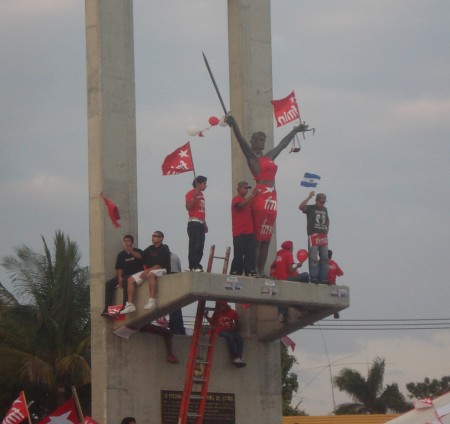
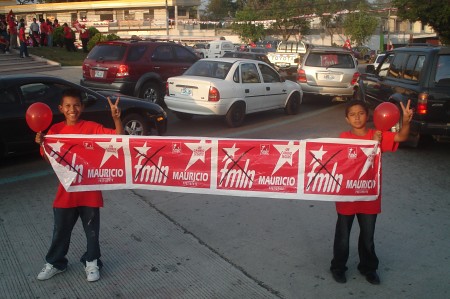
Photos from El Salvador on Election Day

Monday, February 23, 2009

Not Just Some Fractured Fairytale

I've always felt a university breeds (in general) commonsense, appreciation, and tolerance. I've always known that where I grew up, in Manassas, Virginia, (click for map) has no university - and thus, none of the traits that one receives due to proximity.

I first got involved when I was in high school, in 2002, after 9/11. For many my age (21), September 11 was a hinge upon which ones life pivoted. For me, it provided a consciousness, both historical and social, that I have to this day. As I can empathize and relate to cultures that are not my own and quantify human elements that are shared.

Through music, I began to see the polarization of my community. I was a lead singer/writer and bassist for a punk band "A Small Cost" (old mp3s are available here: I sing on "Hopeless Dream" and "Rise Above"). I noticed in the faces in the crowd, all white and not so different from my classes in school. Segregation was commonplace.

I wasn't until after I left, and especially in 2006, when Manassas, my sleepy suburb of DC sought to expel "illegal" immigrants from town (a fantastic piece from this past Sept. by Nuestro Voice will bring you up to speed). Candidates ran for mayor and Congress on deportation platforms, with no regard for families and students, like the ones at ODU or GMU (George Mason University, the "local"ist college in neighboring Fairfax County). It was there I met Eusebio.

I was writing for another class at this point, a feature story on someone I knew since my punk days (he was the guitarist for another band). He feared, in acts of defiance that occurred throughout Manassas (which included tying up traffic as well as 12 by 40 billboard decrying immigration policies) that his family or himself would be deported.

I cannot go back to Northern Virginia as often as I could, mainly because of the massive intolerance that exists. But I'm also reminded of Eusebio, from El Salvador, who helped me understand the world in which immigrants live.

He never chose to be here, I remember him saying. His father, like Gustavo's, fled from San Salvador due to the killings, including some within his family. He lost a brother during the civil war that gripped the country from 1980-1991. Eusebio loved it here, it provided him so much. He often spoke of music, and poetry (he wrote often and loved Salvadoran poet Roque Dalton). Something I never mentioned in my piece for school - we agreed that we needed to speak out on this issue, force Manassas to change its mind. Through music, through words, through action.

I haven't heard from him since April of 2007. His family, after harassment, traveled back to El Salvador, to live with family. I do not, which is often the case, know how to feel. I'm sure he's just fine but part of me looks back on the e-mails we wrote for that article. The poem that he sent to me. The ominous message that it inherited given the new circumstances. It was written for his brother - but it could be written about him.

It’s here
in the city where
water steals people away
under the jaundice glow of streetlamps
where people keep disappearing,
like breath dissipates
into the cold

night air

(from the elderly man
arguing in espanol,
dialects and accents
stenched with sugar cane,
to teenage girls with
middle-age wombs
and a frail white-haired woman
shrouded in a jacket, waiting,
in faded prestige and past dignity
to go to a home
she left
fifty years ago today)

leaving behind
little more than inaudible whispers
and that bitter stain of stale cigarettes to linger in the air

And I keep waking up
spitting blood
through bleeding gums
and cracked lips…

disappearing too.

Sunday, February 22, 2009

The Obscene Fantasies Come True

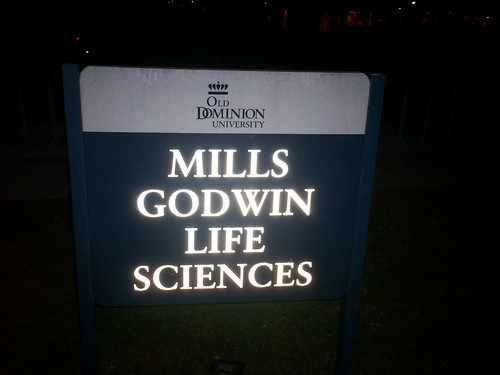
On an impossibly dark night, I ventured forth to the Mills Godwin Building to see the new James Bond flick, "Quantum of Solace."


Normally, this would never strike my fancy, but a friend of mine from Peru (who couldn't come, for her own reasons as well as for already seeing this movie) recommended it, for nothing else than it takes place partly in Bolivia, not the typical site for Hollywood productions.

The story revolves around a new kind of Bond villain, a one Dominic Greene - to our eyes a leading environmentalist and philanthropist whose organization buys large tracts of land throughout the world for ecological purposes. But what is he really hiding. I was skeptical at this point, as oil is one thing...but the resource that Greene is trying to steal is water. Of course, this is what my friend Natalia would want me to see.

In the early 2000s, water and other resources were privatized by the Bolivian government, which led to massive unrest and resistance. The key to this uprising was water - a resource that still is in contention to this day as the winners (the people) in the water war continue to struggle with ways to cheaply give this resource to the whole population.

Natalia later confessed to me that it was fun to see the obscene, she said, fantasies come true on stage. There is a tyrannical ex-president allying against the people, a do-nothing US ambassador who openly accepts a planned coup with nonchalance. "Despite these conspiratorial views, ambassadors continue to be expelled by presidents who fear coup attempts and ex-presidents have endemically cavorted with the US. This movie brings it all back home in a sense."

In a review of the movie online by Jeff Conant, he says:
One wonders if Dominic Greene – had he not died drinking motor oil to quench his thirst in the Bolivian desert – might give the keynote speech at the upcoming World Water Forum in Istanbul. After all, the World Water Council that puts on the forum is presided over by Loïc Fauchon, a former executive at one of the French subsidiaries of Suez, the world’s largest private water corporation.
While reality, as Natalia feels obliged to tell readers of this piece, does not fall within James Bond's capacities - there are people who fight for water and against corporate profiteering just like 007. I was surprised that a movie could be action packed, but for someone who wants to know more about Bolivia, it provides a reality of an important moment not just for its country, but an example of resistance for the whole world.

Wednesday, February 11, 2009

A Brief Conversation Over Dinner

This March, Salvadorans will go to the polls to vote between former journalist Mauricio Funes (FMLN) and security mogul Rodrigo Avila (ARENA). Polls indicate a national lead in the double-digits for the FMLN, the leftist party and former revolutionary vanguard. I mention this to Gustavo, our waiter, who currently lives in Norfolk and is a student at TCC taking a class at ODU, hoping to get into engineering.

"We've seen those leads close before. It will surely tighten. My father came here after it was supposed to get better with Durate [reference to the 1984 election of centrist Jose Napoleon Duarte], but only got worse." His father has not been back since. He did not mention (and I did not ask) if his father was involved in the uprisings in El Salvador. "I don't know if we have the strength to win."

By strength, I fear he means firepower. Many fear that this election will cause more violence in El Salvador, as many of the wealthy and politically elite fear the kind of leftist movements in Latin America. I am talking about a country that, for the last twenty years, has been effectively off the US mainstream radar, and that may be a good thing.

In the 1980s, the Reagan administration, in response to revolutionary change in Nicaragua and some of Latin America away from dictatorship, upped the military aide into Central and South America. In El Salvador, in 1980, the FMLN (the Farabundo Martí National Liberation Front) became an umbrella for leftist organizations that went to war against the political elites. The civil war ended in 1992 with a UN Peace Treaty, still in effect today.

"I remember," he said, "all of the things that happened there. I remember leaving. You talk about school [I asked him about his education], I remember not going to school during halves of those years."

In a country that small, the two sides often get diametrically strengthened as political wills tend to mean a lot more in confined spaces. Coming from Northern Virginia, which over the past few years has outdone much of the country in terms of its nativism, I have seen and reported on the people like Gustavo. And the people who, with all their political, financial and physical might, try to tear them down.

It is hard for us to comprehend the situation in El Salvador. It is difficult to extract the human element from the ignorance and jingoism of the everyday. Gustavo is just like me. Paying his rent and trying to pay for school. His tale, and his fathers get's lost in the fray of what an "American" journey must look like. Since October, we've been talking about the worst times since 1932, since the Great Depression. Well, one must also look at El Salvador from that perspective. In 1932, ten to thirty thousand workers were massacred across western Salvador, much of it in response to the contractions and dislocations caused by that global finanical crisis. El Salvador has not seen a genuine political transition in over 70 years.

This year will be the year, I couldn't help but tell him as our check came. He smiles. Who knows how he must feel.

Wednesday, February 4, 2009

An Overhaul of Immigration Policy

There may be nothing that touches people's nerves more than immigration, and the loaded context in which the word is used and the images it draws up to certain people. It is also true that when one thinks of "immigration," one thinks of Latin Americans.

Old Dominion is one of four of Virginia's 15 universities who will enroll undocumented immigrants, according to the Virginian-Pilot. One only needs to scroll past the usual arguments for and against immigration reform to find the nerves for which I spoke of above. Just one look, even glance, at the hatred displayed in the comments shows the nature of how immigration, and immigrants, are received in this country. Law and order are often used as a guise for blatant racism.

It is often refreshing to move beyond the Eurocentric fallacies and it is in the human element where immigration takes it true form. According to a great article on the blog Immigration, Education and Globalization, "Dead-Ends and Deportation for America's Youth 2 Million Reasons to Find a Solution," Dr. Angela Valenzuela uses two examples of immigration in the US where losing these undocumented workers could be detrimental to America.

* Santiago Cordero graduated from Postville High School in Iowa on May 25, 2008. In addition to starting the school's first soccer team, his participation in varsity football and volunteer programs was applauded by the Superintendent. Despite an immigration raid that tore his mother from their family, Cordero graduated in the top ten of his class. But because Santiago is undocumented, he faces an uncertain future ("Raid mars future for 3 graduating today from Postville," Des Moines Register, May 25, 2008).

* Laura just graduated from high school in Charlotte, North Carolina, with a 4.0 grade point average and dreams of becoming an engineer. But then she learned that Central Piedmont Community College, which she planned to attend for two years before switching to a four-year college, is no longer admitting undocumented students such as herself. Now Laura's plans for college and a career are in limbo ("Yearning to learn, but rule says no," Charlotte Observer, June 17, 2008).

As lawmakers keep trying to "deport their way out" of a dysfunctional immigration system that has fueled a growing undocumented population, they would do well to consider the cases of ... Santiago, Laura, and approximately 1.8 million others, whose deportation would be traumatic not only for the students themselves, but for the American workforce as a whole.

Of course, according to Valenzuela, America will lose potential that these kids bring to our society; lost tax dollars from children who want to be educated in America; and lost workers who, if they cannot go to school, cannot work for our companies for fear of deportation. Thus, it is the human side of immigration that only hardliners or callous individuals defend.

ODU joins world-class universities like Virginia Tech in accepting students regardless of "status" and instead accepts based up merits. Said Larry Hincker of Virginia Tech, determining their legal status is the responsibility of the U.S. government. "It’s not like these people are coming in from Chihuahua. They’re graduating from good Virginia schools. They have good grades. … You don’t get into Virginia Tech unless you’re a good student.” The same, thankfully, applies for Old Dominion.

Tuesday, February 3, 2009

The Child Study Center

In an effort to better learn the Old Dominion campus, a scavenger hunt was requested upon us. We were to write clues for one another to help us get out and explore our campus. My clues were ambiguous in nature - like it was close to a computer lab - with a few specific ones, like those who attend are under supervision. This could lead one only to the Child Study Center.


If you're late coming to school around 4 o'clock, it is often this useful service that is holding up traffic as parent's are picking their children up after work. But it is so much more than just a kindergarten class.

According to its website, it "serves as a cooperative link among the university, community, and early childhood, special education and speech pathology/audiology programs of the university." Through teaching it provides an outreach to the community providing "in-service education, consultation, and clinical service to the local community, agencies, institutions, and school systems."

While I visited the Child Study Center after before 4, I did not see any parents or children outside playing near where the picture above was taken. But the goals of the university are probably being well implemented into the education we're giving the children, as well as the great service for the parents.